
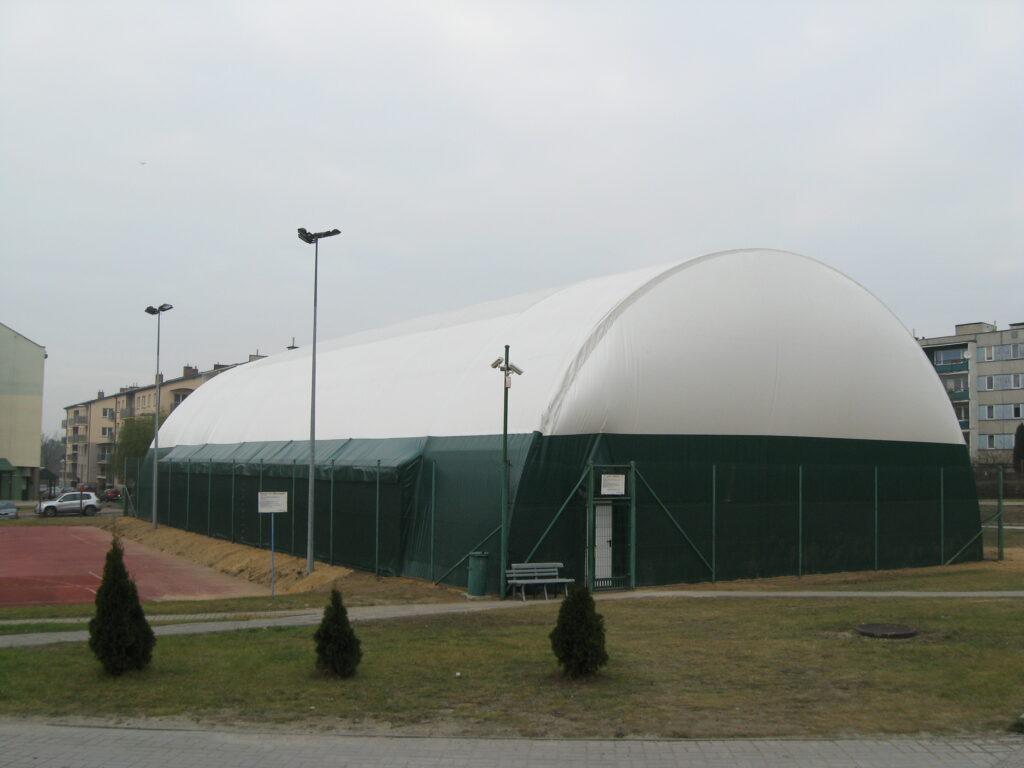
Tarpaulin-covered warehouses are structures used in various industries. They are an excellent solution if you’re looking for a quick and affordable way to gain additional storage space or to provide a roof over an existing structure.
What is a tarpaulin-covered hall?
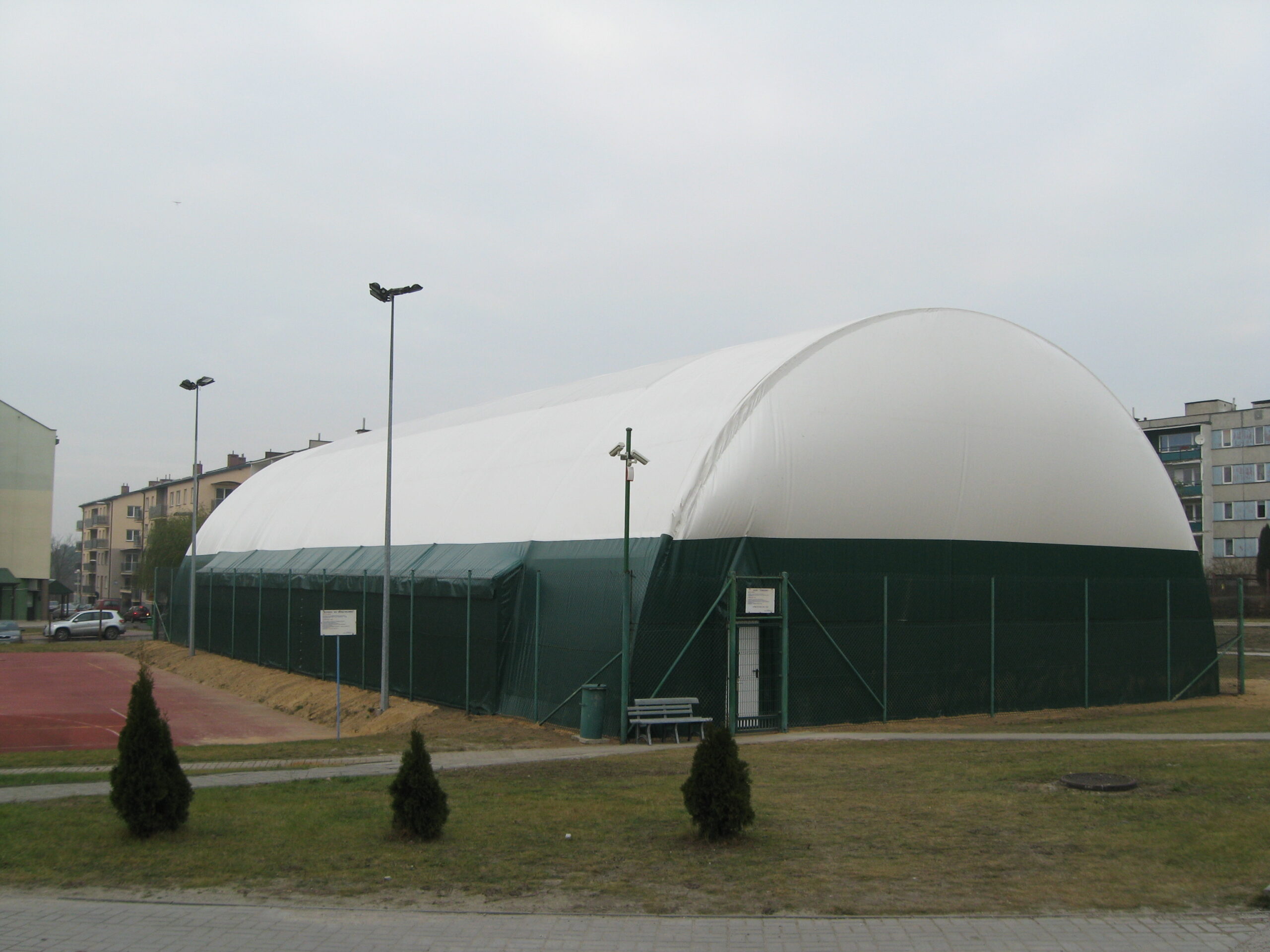
A tarpaulin hall is a structural construction with a wide range of applications and immense popularity. Facilities of this type are based on steel or aluminum frame structures, with the walls and roof covered by a tarpaulin.
The quick and easy production process for tarpaulin halls allows for the creation of structures fully tailored to specific needs, which can serve as tent halls, warehouses, recreational and sports halls, storage facilities, commercial pavilions, or portable tents for special events, etc.
Advantages of tarpaulin halls
Tarpaulin-covered warehouses are structures that are becoming increasingly popular. Their main advantages include:
- Speed of construction —tarp-covered warehouses can be erected much more quickly, making them an excellent alternative to traditional buildings. This saves time and allows you to begin operations in your new space without unnecessary delays.
- Low investment costs —the cost of building a tarpaulin-covered warehouse is significantly lower than that of traditional facilities. As a result, this investment is more financially attractive, especially for companies that are just starting out.
- Design flexibility – tarpaulin-covered warehouses offer a wide range of options for arranging the interior space. They can be adapted to a variety of needs and requirements, which is particularly valuable for many businesses.
- Ease of expansion – if you need more space, tarpaulin-covered warehouses can be easily and quickly assembled and expanded.
- High durability – despite their lower cost, tarpaulin-covered warehouses are highly durable. A properly constructed structure and high-quality materials ensure the facility’s long-term usability.
- Functionality – Because assembly is quick and easy, a tarpaulin hall can be dismantled in a single day, and its covering can be stored in a small space. Seasonal assembly of these halls works well as a roof for sports facilities in the fall and winter.
Uses of Tarpaulin-Covered Warehouses
Tarp-covered warehouses are used in various industries, such as:
- Industry —such as industrial warehouses, production facilities, or workshops.
- Construction —for machinery, building materials, or customer interactions at construction sites.
- Agriculture —such as warehouses for feed, fertilizers, or farm machinery.
- Retail – such as warehouses, sales floors, or hangars.
- Sports – used as roofing for sports fields, training facilities, or other sports venues.
- Special events —as venues for celebrating special occasions.
Step-by-Step Guide to Building a Tarpaulin-Covered Shed
The construction of a tarpaulin-covered hall is a process that combines innovative architecture with practical industrial solutions. These versatile structures, made of modern materials, offer unmatched flexibility and adaptability to a wide range of applications.
Construction of a warehouse should begin with selecting a location and a design. You can choose from a selection of ready-made tarpaulin warehouses or create a design tailored to your needs with a custom quote. The next important step is preparing the site for the hall. This is a crucial stage, as a carefully prepared foundation will ensure the durability and reliability of the entire structure. The final step is assembling the hall, erecting the steel structure anchored in the ground or on a foundation, and installing the tarpaulin. The entire process is carried out after a thorough quality check to ensure that the hall’s structure has been properly constructed and meets all requirements.
When constructing structures such as tarpaulin-covered halls, a modular construction system is most commonly used, as it is the fastest and easiest—and therefore the quickest and most cost-effective. Importantly, this type of hall is a lightweight structure that is extremely easy to dismantle and move to another location. As a result, no building permit is required to erect this type of hall. The only thing to keep in mind is that it must be dismantled within 180 days.
Does erecting a tarpaulin-covered shed require a building permit?
Tarp-covered structures that are used seasonally for a period of 180 days or less may be constructed without the need to obtain a building permit. This is possible thanks to a simplified construction notification process, which significantly streamlines the legalization process and allows the facility to be put into use more quickly.
Tarpaulin-Covered Sheds – Types of Structures
Tarpaulin-covered warehouses come in a variety of designs. We offer arched or traditional warehouses with single- or gable roofs, tailored to the user’s needs.
Despite its apparent temporary nature, a tarpaulin-covered hall has an exceptionally long service life—even spanning several decades—which, when compared to its cost, is truly a great value.
If you’re looking to expand, enlarging a tarpaulin-covered hall is no problem at all and can be done quickly and efficiently—all thanks to the easy-to-expand profile systems on which these types of structures are based. See the hall specifications for detailed information.
If you’re interested in building a tarpaulin-covered warehouse, be sure to check out the offerings from our company, GRIMAR. As specialists, we take care of every aspect of the construction process and tailor our services to each customer’s individual needs. Our tarpaulin-covered warehouses are characterized by high-quality workmanship and attractive prices. Contact us today!