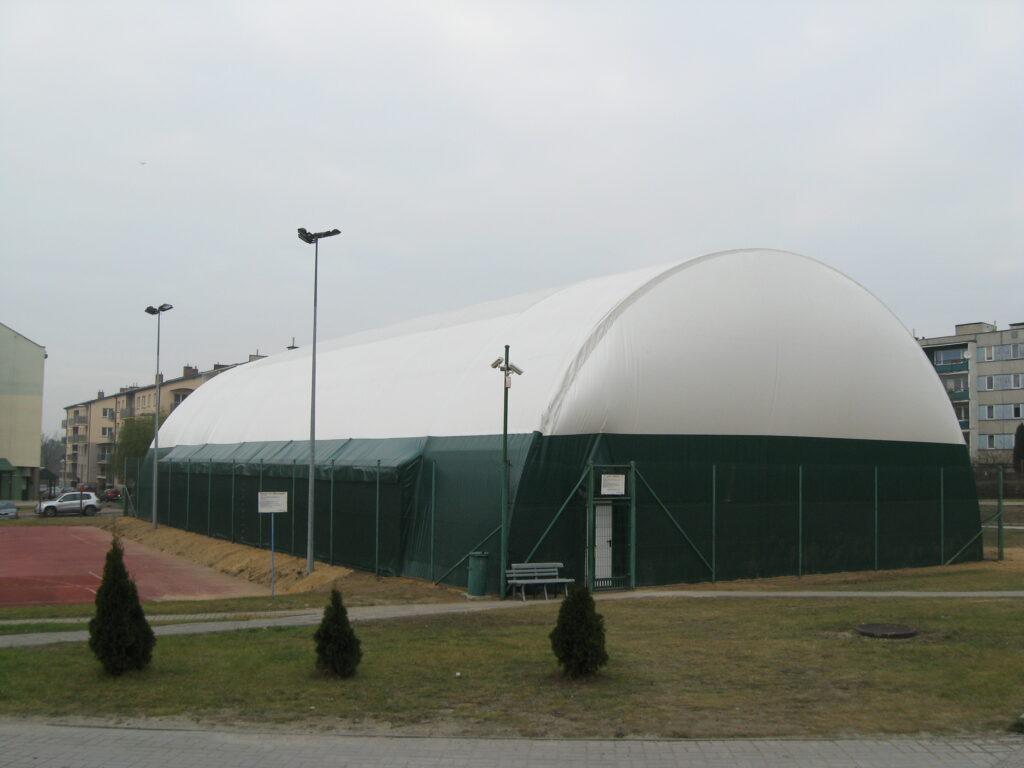
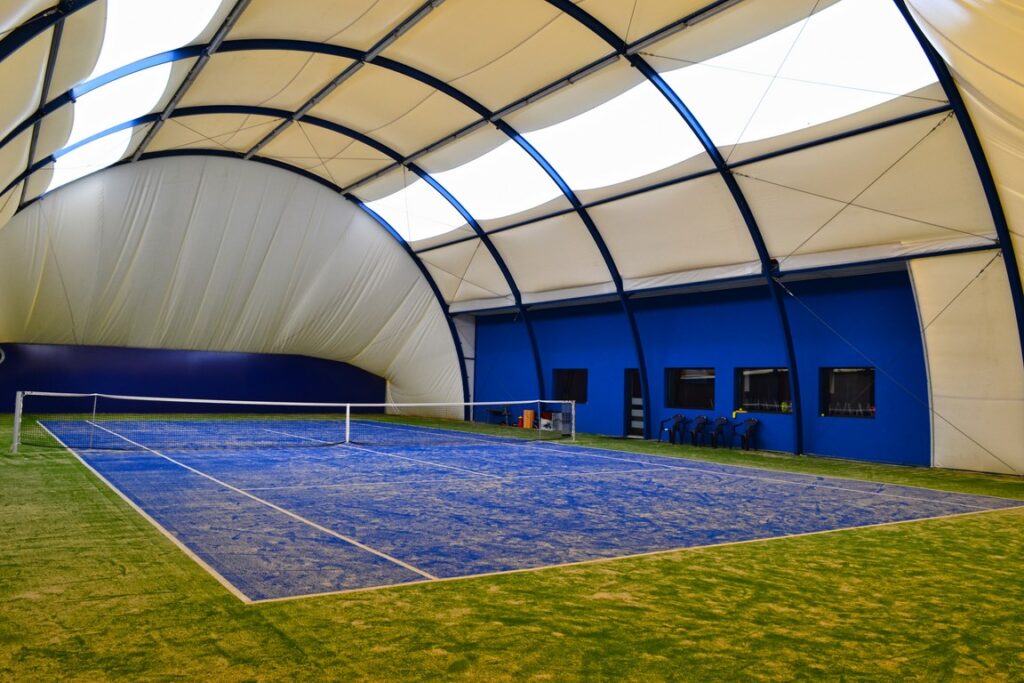
A lightweight hall is an alternative to heavier steel structures; it is less expensive, easier to assemble, and can be easily moved from one location to another. The structural components of these types of facilities are made of aluminum, which is much lighter than steel. As for wall cladding, the walls of lightweight halls are covered with plastic materials, such as modern PVC membranes or tent fabric. These materials are extremely lightweight yet highly resistant to weather conditions.
How long does it take to build a lightweight hall?
The construction of a lightweight building takes little time and includes pouring the foundations, if necessary, since lightweight buildings can also be installed directly on natural ground. A lightweight building can come in a wide variety of sizes; in fact, it all depends on the intended use of the specific building.
Lightweight Hall – Applications
And these types of structures have a wide range of applications. Thanks to their easy assembly and disassembly, they are ideal not only as temporary structures but also as year-round facilities. They can be used as production facilities, seasonal facilities at horse farms—so-called riding arenas—where a lightweight fabric structure covers the paddock during the winter. They can also be used as breeding facilities, recreational facilities, sports facilities, or simple warehouses. They are ideal as retail or fair pavilions, as well as tent structures.
Importantly, for temporary use—regardless of the size of the light-frame building—there is no need to obtain a building permit. The only requirement is that the building must be dismantled within 180 days of its erection.
You can find more information about our offerings on our Grimar website.