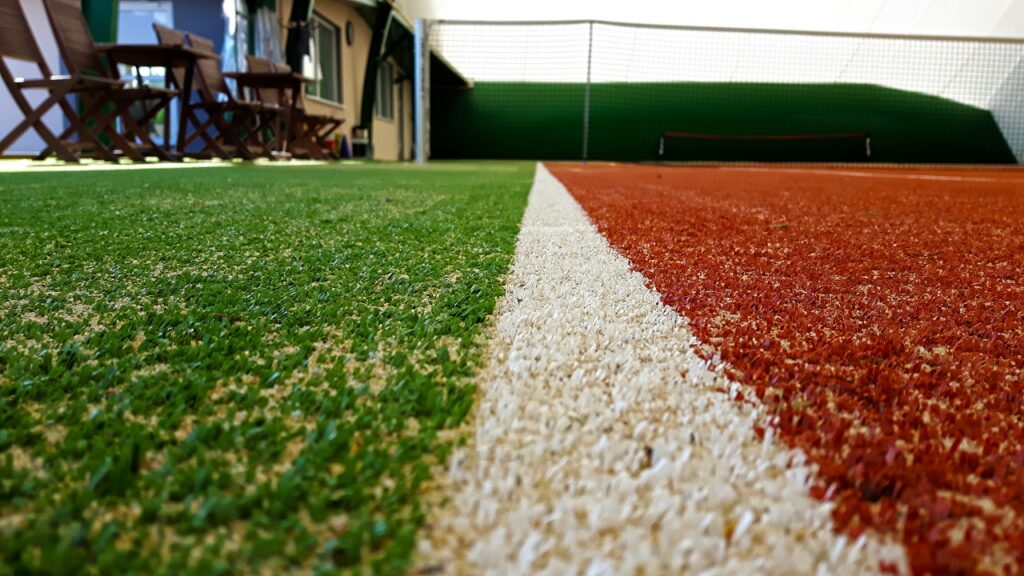
Synthetic grass originated in the Netherlands, and it was there that artificial grass first came into widespread use. Generally, as the name suggests, artificial grass consists of synthetic fibers attached to a backing, which is then laid out and secured to a surface that has been prepared for installation.
This makes synthetic grass extremely easy to maintain. The synthetic grass fibers are bundled together and then attached to the base layer. They are made from several types of synthetic materials, including:
- polypropylene
- polyethylene
- copolymer—a combination of the two materials above
Synthetic fibers are also divided into two types:
- monofilament – these are thick and abrasion-resistant; they are highly elastic and durable, and also resistant to breakage
- fibrillated – they are highly stable, flexible, and more resistant to high temperatures, which prevents their surface from getting too hot
Synthetic Grass – Popular Applications
Thanks to its ease of use—since artificial grass doesn’t need to be mowed, watered, or fertilized— synthetic grass is used in a wide variety of settings, including commercial, athletic, and residential applications. So where can you find synthetic lawns?
- Gardens and Yards – Synthetic grass is ideal for use in private gardens and yards. It provides an attractive and durable lawn that requires no watering, mowing, or fertilizing. You can enjoy a green lawn all year round without the need for regular and rather demanding maintenance.
- Sports Fields – Many sports facilities are beginning to use synthetic turf because of its durability and flexibility. Synthetic turf provides a uniform and perfectly prepared playing surface, making it ideal for soccer fields, tennis courts, and sports such as rugby, hockey, or golf.
- Recreational spaces —parks, playgrounds, picnic areas, and other recreational spaces are increasingly being equipped with artificial turf, which is very durable, easy to clean, and resistant to heavy use. In this way, synthetic grass creates a safe and attractive place for relaxation and play.
- Patios and Balconies – Synthetic grass can also be used as a decorative covering on patios and balconies, creating a pleasant, green environment. Thanks to its flexibility and ease of installation, it can be adapted to any shape and size of surface.
It’s worth noting that synthetic fibers are also divided into two types: monofilament and fibrillated synthetic grass. They have slightly different properties and uses. A blended version of artificial turf is also available. What exactly distinguishes each type?
Monofilament grass
This is a type of synthetic grass with individual, thin fibers that are arranged vertically. This gives it a natural appearance and good resistance to heavy loads. The blades are thick and abrasion-resistant; they are highly resilient and durable, and are also resistant to breakage. Monofilament grass is often used on sports fields, playgrounds, and public spaces—in other words, anywhere where the surface is subject to heavy use.
Fibrillated grass
This type of synthetic grass has a structure in which the fibers are divided into smaller, branched blades, creating a fluffier and softer surface. This grass is characterized by high stability, flexibility, and greater resistance to high temperatures, which prevents its surface from getting too hot. Fibrillated grass is often used in private gardens, as artificial grass for balconies, in recreational backyard spaces, and in decorative public areas.
Blended Grass
This is a combination of monofilament and fibrillated grass. This blend provides even greater durability and a more natural-looking lawn surface. Mixed grass surfaces are suitable for both high-traffic areas and private gardens.
Installation of artificial grass
Installing artificial turf is a multi-step process that consists of:
- Site preparation —remove existing grass, weeds, and other objects from the area where the synthetic turf will be installed. Next, level the ground and remove any significant unevenness, and finally, compact the soil.
- Choosing and purchasing synthetic grass – when selecting synthetic grass, pay attention to the density and length of its fibers to ensure they match your preferences and intended use. When purchasing, you should also consider the amount needed, taking into account the dimensions of the area where you plan to install it.
- Laying the underlay – Spread the underlay for synthetic turf on the prepared surface. This can be a layer of sand or a special underlay material that will help distribute the weight evenly across the surface and improve drainage.
- Installing synthetic turf —lay or unroll the synthetic turf on the underlayment, making sure it is evenly spread out and free of any creases. If the turf comes in rolls, carefully cut the pieces to fit the dimensions of the area.
- Securing the turf – Use special anchors or fasteners to secure the synthetic turf to the base. Once the work is complete, check to make sure the fasteners are evenly spaced to ensure the surface is stable.
- Sand infill (optional) – used for synthetic turf that can be filled with quartz sand. Sprinkle a thin layer of sand over the top of the turf. Sand infill helps keep the turf fibers upright and improves its stability.
- Filling with special granules (optional) —another type of artificial turf infill, used when better shock absorption is required.
Caring for Artificial Grass
Caring for artificial grass is much simpler than caring for its natural counterpart—real grass. In practice, all you need to do is:
Regular cleaning
Regularly remove leaves, twigs, and other debris from the lawn. You can use a broom, a dry vacuum cleaner, or a wet/dry vacuum cleaner.
Removing Stains
If stains or dirt appear on the grass, remove them immediately. You can use a mild dish detergent and a soft brush to gently clean the affected areas. Then rinse everything thoroughly with water.
Water Drainage
Synthetic grass is water-resistant, so you don’t have to worry about water pooling on its surface. However, in the event of heavy rainfall, it’s a good idea to use a drainage system to remove excess water.
Limiting contact with hot objects
You should not place hot objects, such as a grill, directly on the synthetic grass. This may damage it.
Avoiding Sharp Tools
It’s best to keep sharp tools away from artificial grass, as they could cut or damage its fibers.
By following the tips above, you can enjoy the beautiful appearance of your artificial grass for a very long time.
As you can see, artificial grass is an innovative solution that offers a great alternative to natural grass. Its various types and applications make it an attractive choice for those looking for a durable, low-maintenance, and aesthetically pleasing lawn that is more resistant to weather conditions. As a result, a well-maintained artificial lawn, unlike a natural one, looks great all year round.
Grimar offers a wide range of sports surfaces, as well as advanced solutions using artificial turf.