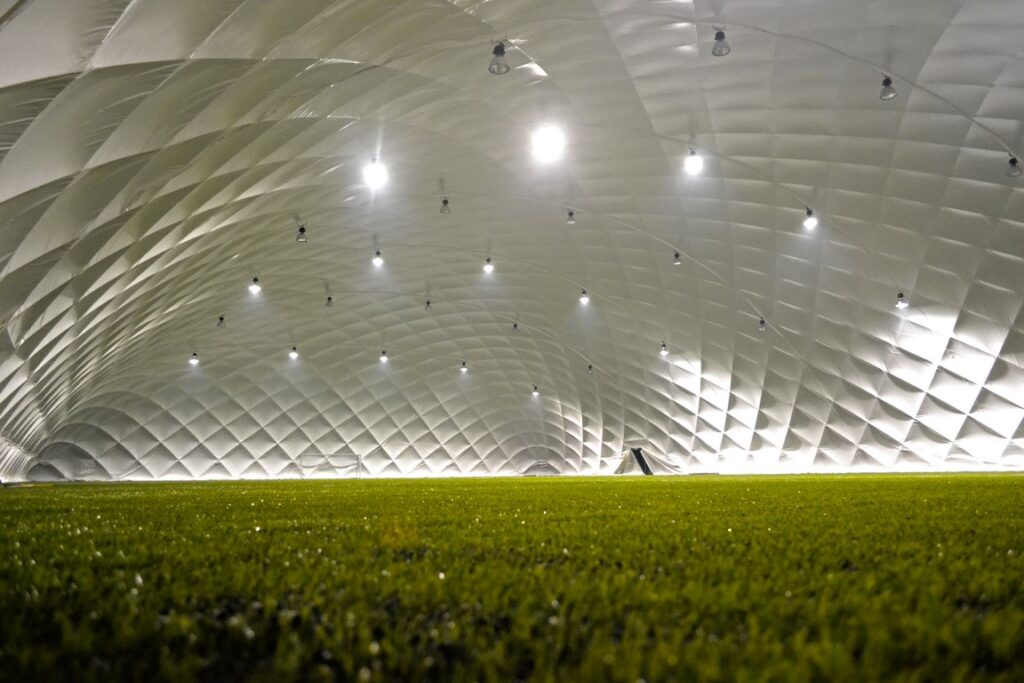
The use of natural grass fields has always been associated with the burdensome necessity of regular maintenance. Everything has changed since the advent of a new generation of sports surfaces— artificial turf. No more mowing or annual field renovations. Artificial turf guarantees that the surface will maintain high performance over a very long period, even with heavy use.
This is possible thanks to the use of special polypropylene or polyethylene fibers, which make up the synthetic grass. These fibers are resistant to mechanical damage as well as to harmful weather conditions, such as snow, rain, and low or high temperatures.
Artificial Turf Sports Fields – Convenient to Use and Easy to Maintain
Artificial turf used as a sports surface consists of a perforated backing with fibers embedded in it. This ensures high drainage capacity and protects the surface from water accumulation and mud formation. Such sports turf is constructed from:
- a previously prepared, cured substrate
- a flexible underlay applied to it
- the underlay consists of a mesh with bundles of synthetic fibers embedded in it
Synthetic turf, therefore, does not deteriorate in the same way as natural grass. There is no need to mow or reseed the grass. This makes maintaining and using the field simple and does not incur any additional costs.
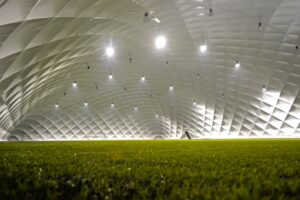
Artificial grass and the type of pitch
Artificial turf is available in a variety of specifications, including fiber density, fiber height, and hardness. This allows for a variety of turf types to be tailored to virtually any training or recreational field, including:
- football pitches
- padel courts
- grass tennis courts
All this makes synthetic turf one of the most functional sports surfaces and the most frequently used surfaces in newly built sports facilities.
More information about our offer can be found on our Grimar website.