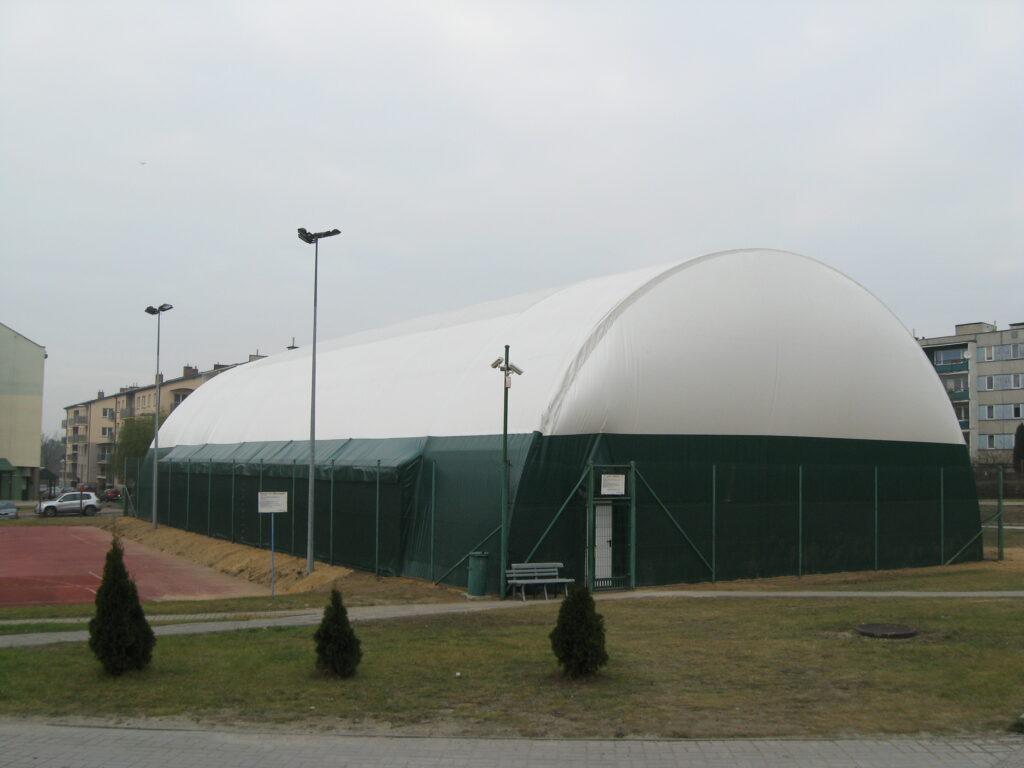
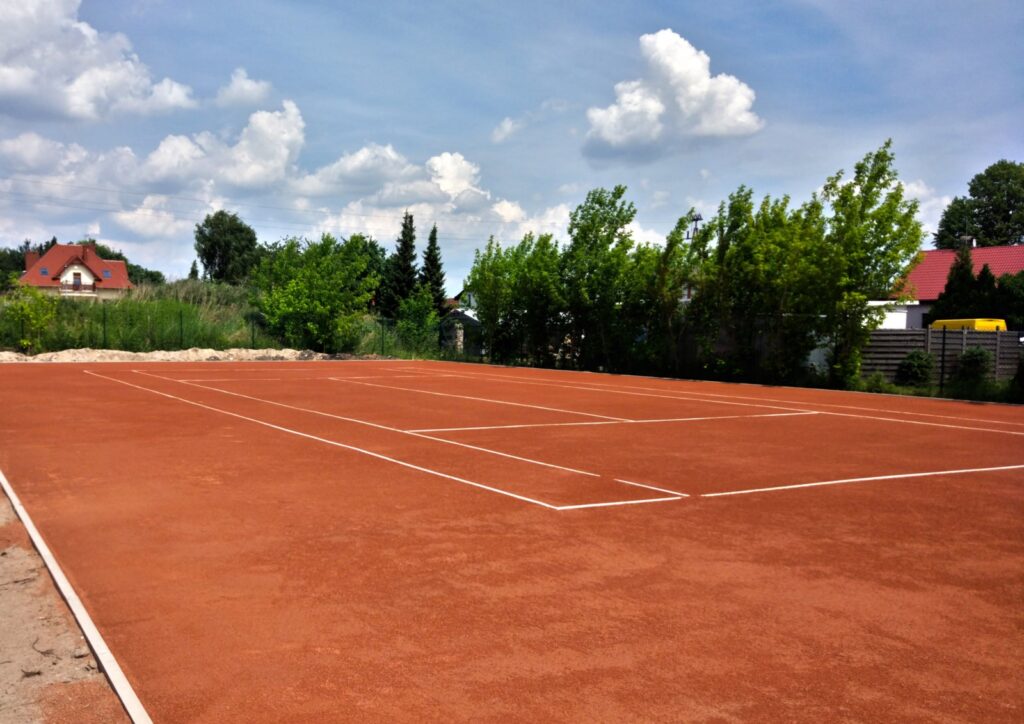
Tennis court surfaces are crucial for the court’s performance and the players’ comfort, as well as for the costs of its subsequent maintenance. There is a wide range of construction technologies available for tennis courts, ranging from traditional brick dust to modern surfacing materials, artificial turf, and acrylic surfaces—tennis court construction.
Of course, building a tennis court involves more than just laying down a top layer of artificial turf or compacting the ground and spreading brick dust over it. First, it is necessary to prepare the subbase on which the actual court surface will be built.
Construction of Tennis Courts – Subbase Installation
The first step in building a tennis court is earthwork, which is intended to level the ground and prepare it for the construction of the court’s subbase. These tasks and the type of subbase used depend on the type of surface selected. How does this work in practice?
- Brick dust surfaces—a dynamic subbase, such as one based on Bergolit, is used here; thanks to its permeability, it works exceptionally well on outdoor courts.
- Acrylic surfaces—concrete- or asphalt-based subbases are used for this type of court.
- Artificial turf surfaces – dynamic subbases are also used here, making them ideal for both outdoor and indoor facilities.
- Tennis carpet surfaces—these require a level surface, which is why asphalt concrete or concrete subbases are used in this case. These types of surfaces are designed for indoor courts, but with proper waterproofing, they can also be installed at outdoor facilities.
The construction of tennis court surfaces typically involves removing the topsoil (the top layer of soil), followed by compacting the ground, spreading a layer of aggregate (e.g., sand), and applying a stabilizing layer, such as Bergolit or asphalt concrete. Only after the subbase has been prepared in this way is the tennis court surface laid.
You can find detailed information on our Grimar website.