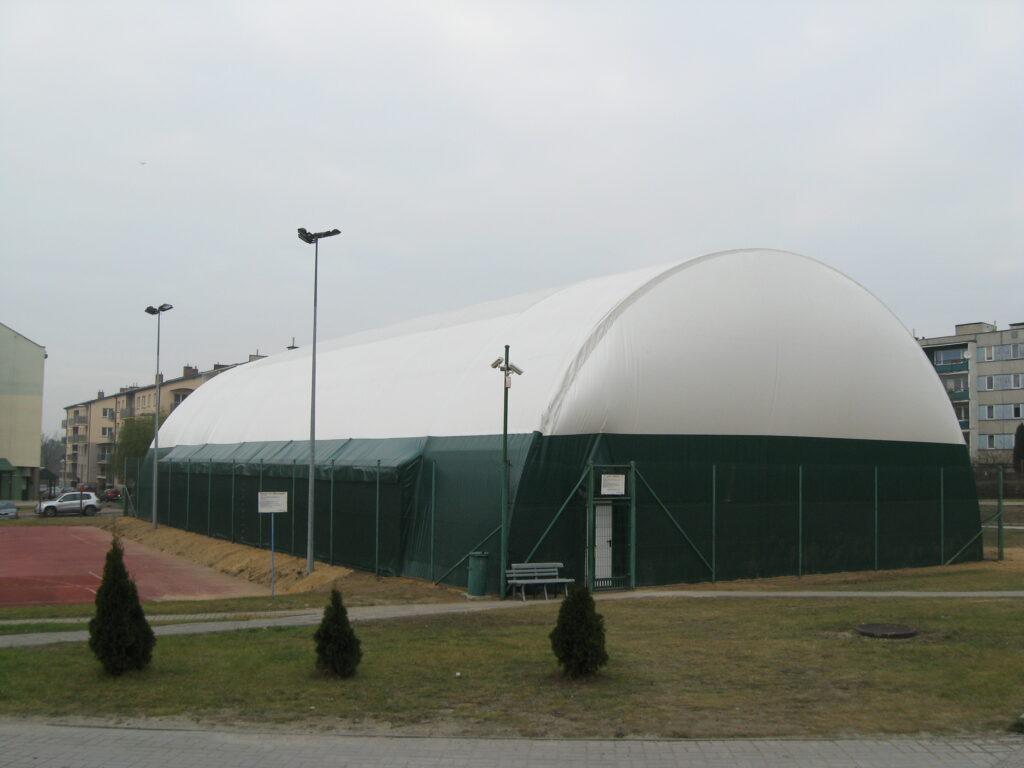
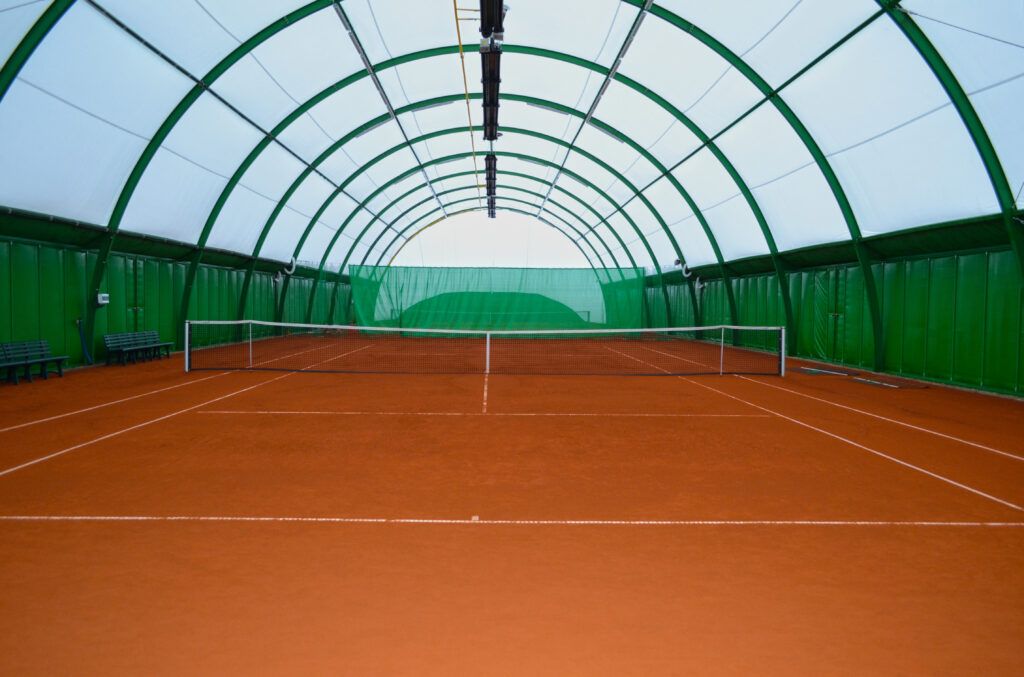
A tennis hall is a structure classified as a sports facility that protects tennis courts and the players using them from adverse weather conditions. This makes it possible to use the courts year-round. Regardless of the weather or the temperature outside.
Unfortunately, this level of versatility and functionality is impossible to achieve with outdoor courts—that is, those that are completely open and where the game is played in the open air. Modern tennis indoor facilities usually have forced-air heating systems. These ensure an optimal temperature inside, making the tennis court a year-round facility.
Tennis Hall – Design and Dimensions
Most often, a standard hall has an arched structure, although buildings with gabled roofs are still common. Current construction technology for these types of facilities relies on lightweight or heavier steel structures set on concrete foundations, which are then covered with materials such as membrane coatings or PVC tarps. One of the advantages of this solution is the ability to choose a roofing material that allows sunlight to pass through.
Advantages of Indoor Tennis Courts
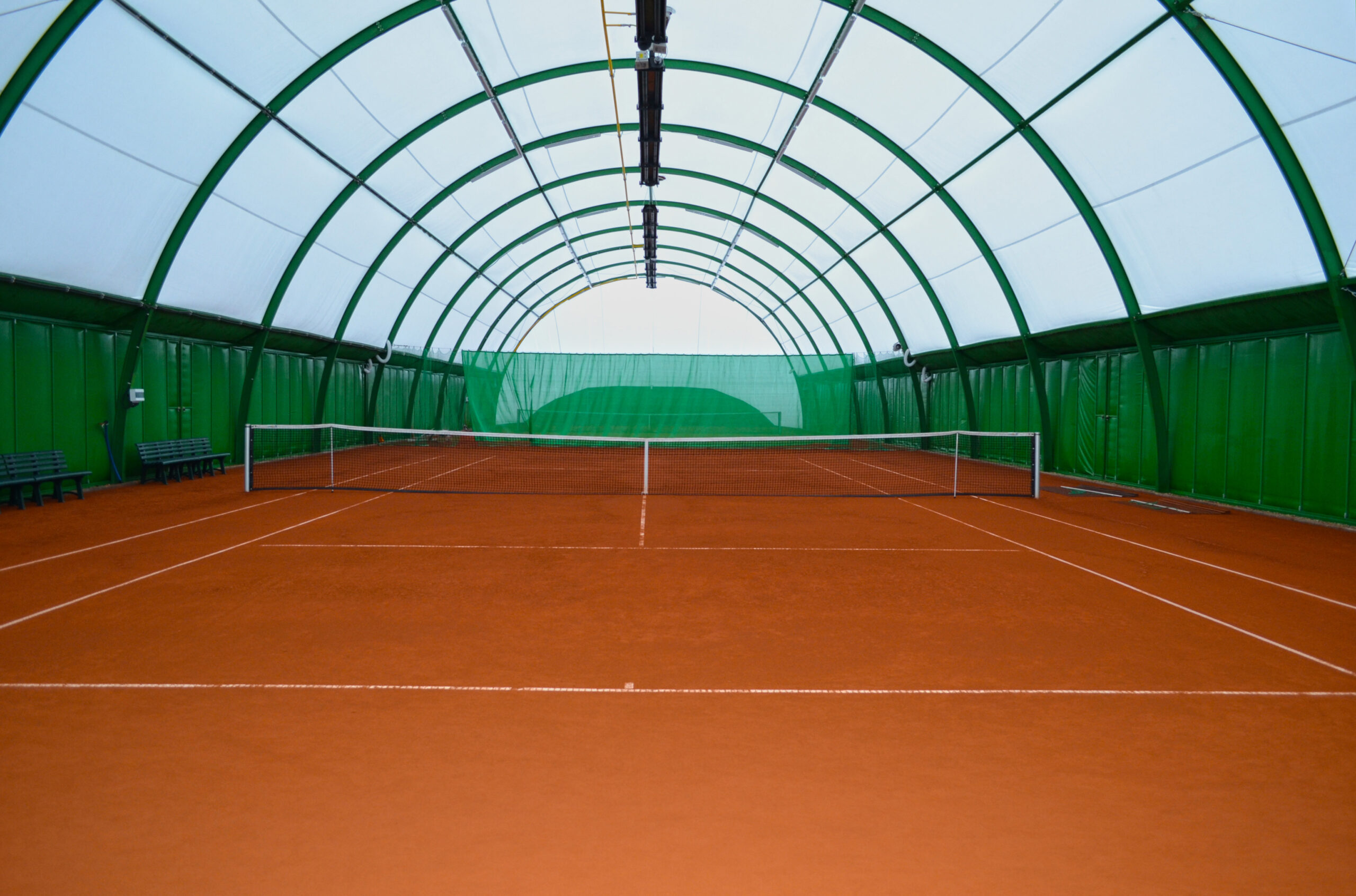
Among the advantages of tennis courts built using modern modular systems is the ability to combine them into a single facility and the ease with which additional courts can be added. A tennis court can also be equipped with additional skylights, as well as the necessary infrastructure, such as locker rooms and restrooms.
A tennis hall must be large enough to accommodate a tennis court. The standard length of a court is 23.77 meters, and the width is 8.23 meters. A standard tennis hall is therefore approximately 17–18 meters wide, 34–36 meters long, and 7.5–8 meters high.
You can find additional information on this topic on our website.